
Employees who travel between offices, client sites, training, events or temporary workplaces and need to track trip mileages. Travel Logs can capture those journeys without mixing them up with ordinary personal travel.
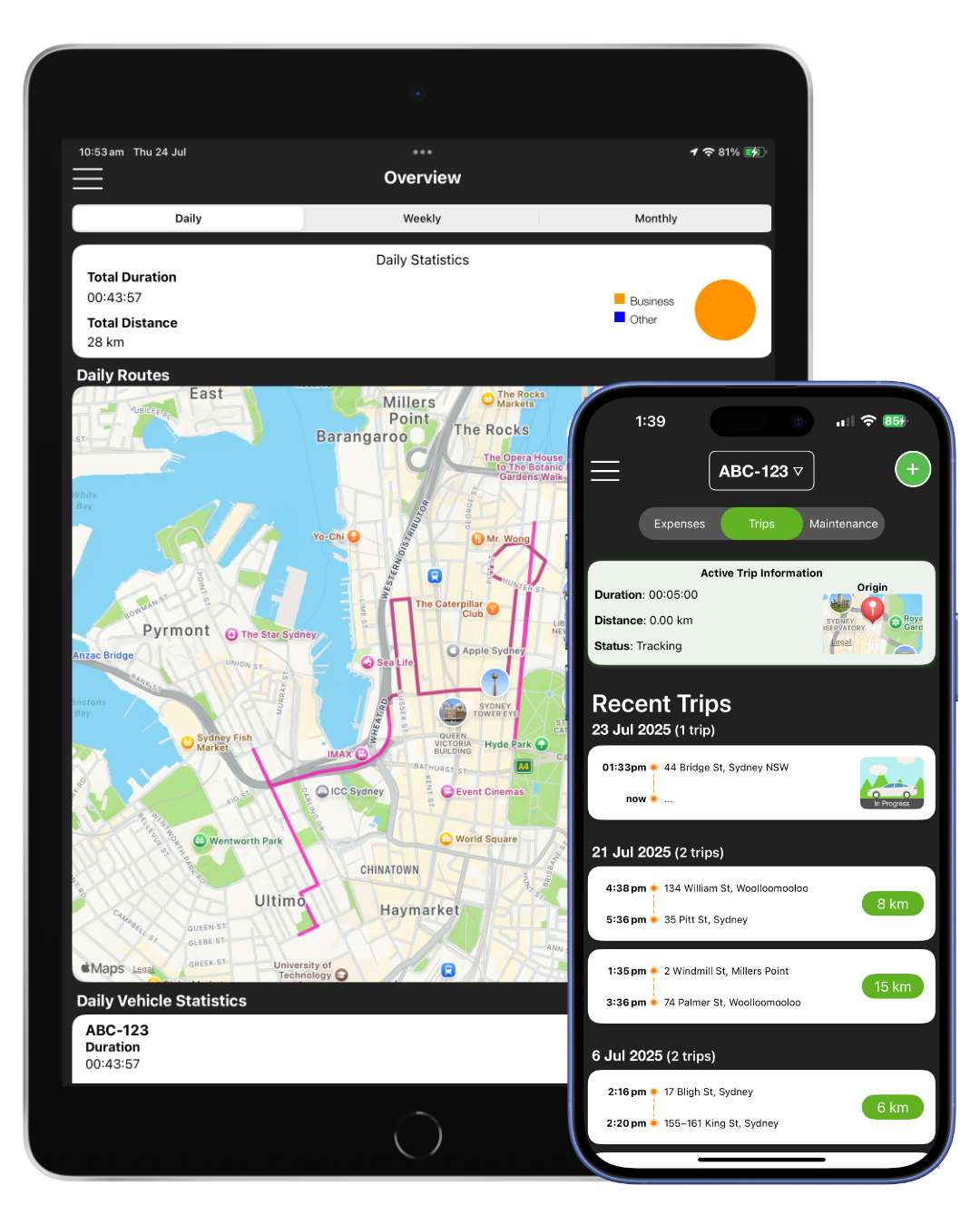
Record trip dates, locations, kilometres and confirm with your employer of any approval processes. Trip automations can help reduce forgotten journeys, but always review each trip for completeness.
Identify which journeys are personal and which are for business.
Record the purpose and destination soon after each journey.
Travel Logs will keep track of the odometer attached to each trip, particularly when you sometimes use more than one vehicle.
Export PDF or CSV report summaries for easy review and reimbursement claims. Always check the report before submitting it to an employer or adviser.
Only share the records needed for the relevant business process. Fleet users can submit selected records while retaining other personal records separately.
A quick weekly check helps catch missing destinations, incorrect classifications and incomplete purposes before they become difficult to remember.
Next steps