
A vehicle logbook is most useful when it is complete, representative and reviewed regularly. This general guide explains a practical recording workflow for Australian drivers; it is not tax advice, and current ATO guidance should take priority.
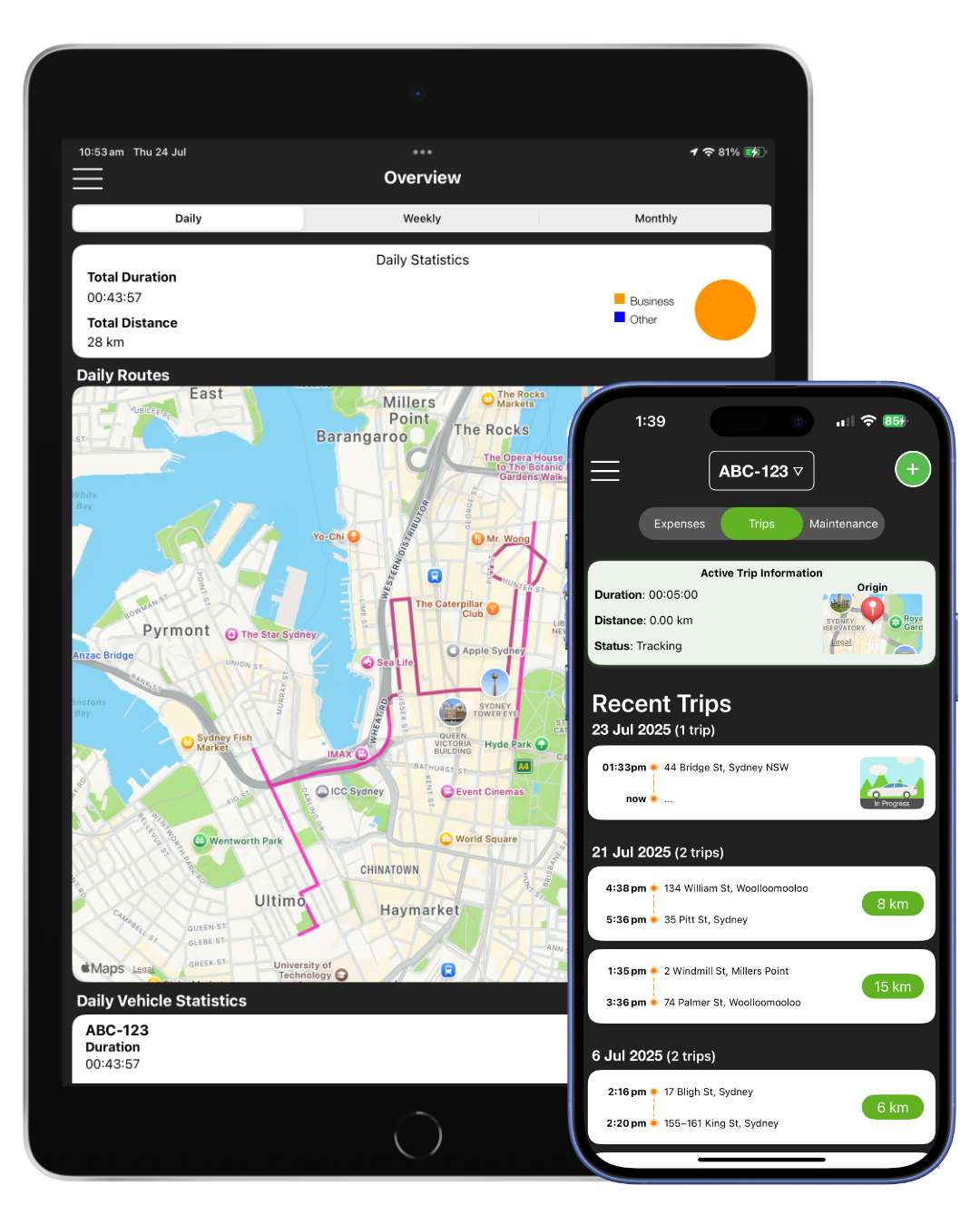
The ATO generally refers to a continuous 12-week period that represents normal vehicle use. Avoid choosing an unusual period unless it genuinely reflects your circumstances.
Capture the date, start and end locations, purpose, distance and other required trip details. Missing journeys can affect the picture your logbook provides.
Record the odometer information required for your method and circumstances. Check that calculated distances remain consistent with the vehicle’s actual readings.
Separate business and personal journeys based on their actual purpose. A tracked route is not automatically a business trip simply because it was recorded.
Check the logbook frequently for missed trips, unclear purposes or incorrect vehicles. Details are much easier to correct while they are recent.
Keep relevant expense documents, vehicle details and other supporting records required for your circumstances. A logbook is only one part of good record keeping.
Export a PDF or CSV copy for review and retention. If you are unsure how the rules apply, confirm the current requirements with the ATO or a qualified tax professional.
Next steps